How we support your child's future
At Tor View School, we believe every young person should be supported to move towards a fulfilling and independent adult life. Careers education and Preparation for Adulthood (PfA) are embedded throughout our curriculum to help pupils develop confidence, skills, and real‑life experiences that support success beyond school.
Our approach is personalised, strengths‑based, and closely aligned with each pupil’s aspirations, needs, and Education, Health and Care Plan (EHCP).
Preparation for Adulthood supports pupils to plan for life after school in a meaningful and structured way. The programme
brings together education, health, and social care to ensure joined‑up support.
We focus on four key areas:
• Employment
• Independent Living
• Community Inclusion
• Health
Our careers programme follows the Gatsby Benchmarks and is reviewed regularly using the Compass self‑evaluation tool. Careers learning is embedded across the school day and adapted to meet individual needs and pathways.
Careers education is embedded across the school day and woven into the wider curriculum, supporting pupils to develop key skills, knowledge, and attitudes for life beyond school. Learning opportunities are carefully adapted to meet individual needs, abilities, and aspirations, recognising that every pupil’s journey is unique.
Through personalised pathways, meaningful experiences, and appropriate guidance, we aim to raise aspirations, build confidence, and enable all pupils to make informed choices about their future.
We work in close partnership with parents and carers to plan meaningful next steps for every pupil.
This is achieved through:
• EHCP reviews and carefully planned transition meetings
• Careers guidance focused on individual aspirations
• Visits to colleges, training providers, and workplaces
• Personalised one-to-one support with CV writing, applications, and interview preparation
Our experienced team is committed to supporting pupils and their families at every stage of their journey, ensuring a smooth and successful transition beyond school.
Families play a vital role in supporting young people to prepare for adulthood and future careers by embedding key skills into everyday life.
Encouraging independence and decision-making helps build confidence and resilience, allowing young people to take ownership of their choices and learn from experience.
Regular conversations about strengths, interests, and future goals can help them develop a clearer sense of direction, recognise their abilities, and make informed decisions about their pathways.
Practising essential life skills, such as cooking, budgeting, and travelling independently, provides practical experience that will be crucial for managing adult responsibilities and accessing education or employment opportunities.
Supporting participation in community activities, clubs, or volunteering helps young people develop social skills, teamwork, and a sense of belonging, while also exposing them to new experiences that can shape their aspirations.
Together, these approaches help build confident, capable individuals who are better prepared for the transition into adult life.
School Based Work Experience
Pupils develop employability skills through meaningful roles within the classroom and wider school, such as:
- Resource or pencil monitor
- Tidying and chair stacking
- Snack preparation and food service
- Recycling helper
- Library monitor
- Peer mentoring
- Café simulation and customer service role play
- Gardening and outdoor work
- Post and delivery duties around school
These opportunities help pupils practise responsibility, teamwork, communication, and independence in familiar settings.

Community-Based Work Experience Opportunities
Where appropriate, pupils access supported work experience opportunities within the local community. These placements allow students to apply their skills in real-world settings while building confidence and independence. Our current partnerships include:
- Charity shops
- Animal rescue placements
- Primary schools
- Reservoir and discovery centres
- Local sporting clubs
- Bookshops
- Cafés
This range of opportunities continues to grow and evolve. Work experience placements are carefully matched to pupils’ individual needs, strengths, motivations, and long-term goals, ensuring experiences are meaningful and personalised.
Throughout their placements, students are supported to follow instructions, demonstrate appropriate workplace behaviour, develop communication skills, and gain an understanding of employer expectations and routines.
Accreditation
Depending on their individual learning pathway, pupils are provided with access to a range of carefully selected accredited programmes that support both personal development and academic achievement. These include:
- ASDAN Life Skills Challenge, focuses on developing essential everyday skills such as organisation, communication, and independence
- ASDAN Towards Independence, is designed for pupils working at earlier developmental stages, supporting the acquisition of foundational life and engagement skills
- ASDAN New Horizons, enables learners to explore personal, social, and vocational themes while building confidence and resilience
- Functional Skills qualifications in English and Maths (NCFE), which provide practical, real-world literacy and numeracy skills that prepare pupils for further education, employment, and independent living
Pupils are supported through informal, semi-formal, and formal pathways, ensuring that teaching and learning approaches are appropriately matched to their individual needs, abilities, and starting points. This structured yet flexible model promotes clear progression, enabling all learners to develop at a pace suited to them, while maintaining high expectations and ensuring full accessibility to a broad and balanced curriculum.

Skills Builder
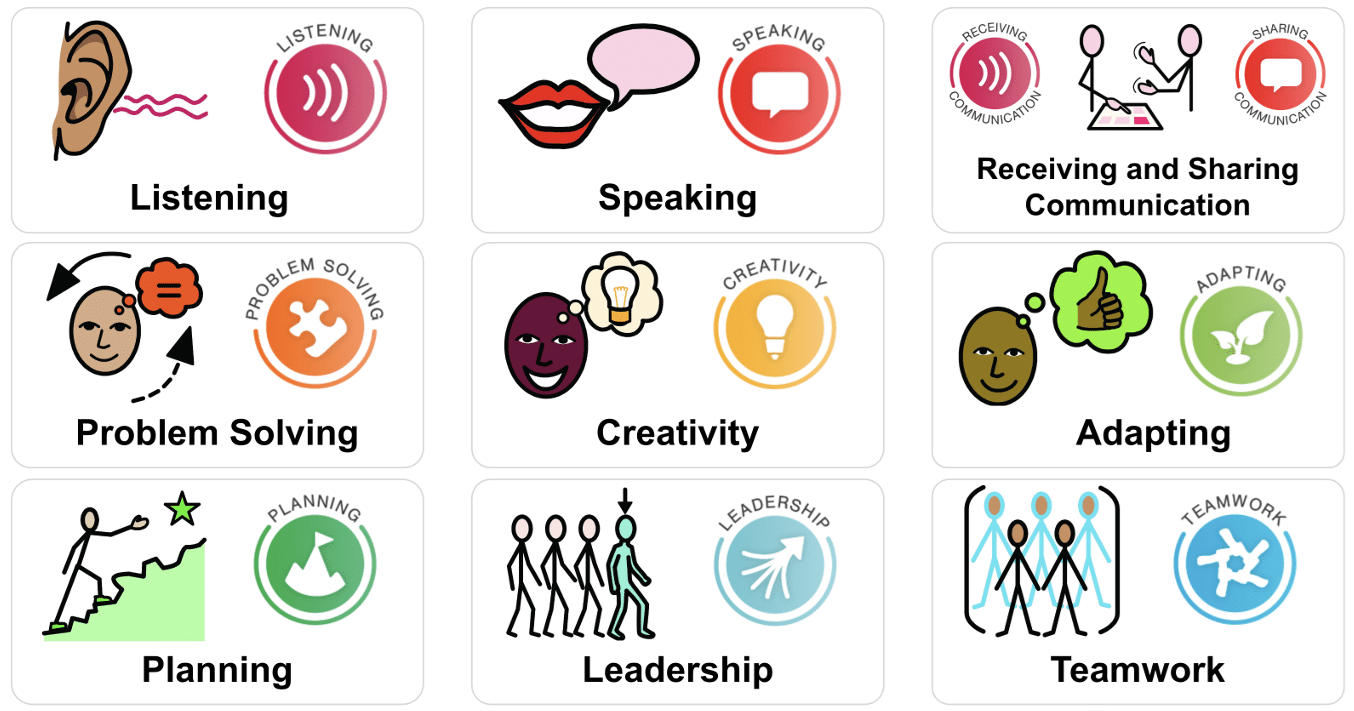
Tor View School is part of the Skills Builder Partnership, which is embedded across our curriculum and supports pupils to develop essential employability and life skills across all learning pathways: informal, semi-formal, and formal.
Pupils develop key skills including:
- Listening
- Speaking
- Teamwork
- Leadership
- Problem solving
- Creativity
- Planning
- Adaptability
These skills are practised and reinforced in ways that are appropriate to each pathway:
-
Informal learning: Pupils experience and develop these skills through sensory-based activities, structured play, and supported social interaction, helping them build early communication, engagement, and independence.
-
Semi-formal learning: Pupils apply their skills through themed, experiential learning, group activities, and real-life contexts, promoting collaboration, problem-solving, and growing independence.
-
Formal learning: Pupils further develop these skills in subject-specific lessons, accredited courses, and structured tasks, as well as through work experience placements and preparation for adulthood.
Across all pathways, these skills are also strengthened through pupils’ social opportunities, enrichment activities, and engagement with the wider community, ensuring a consistent and meaningful approach to personal development.
Get in touch!
Have a question about careers support or post-16 planning? Our team is here to help!
Please get in touch with our Careers Leader, Lydia Gannon lydiagannon@aspriscs.co.uk